













Electroencephalography (EEG)
Content
Description
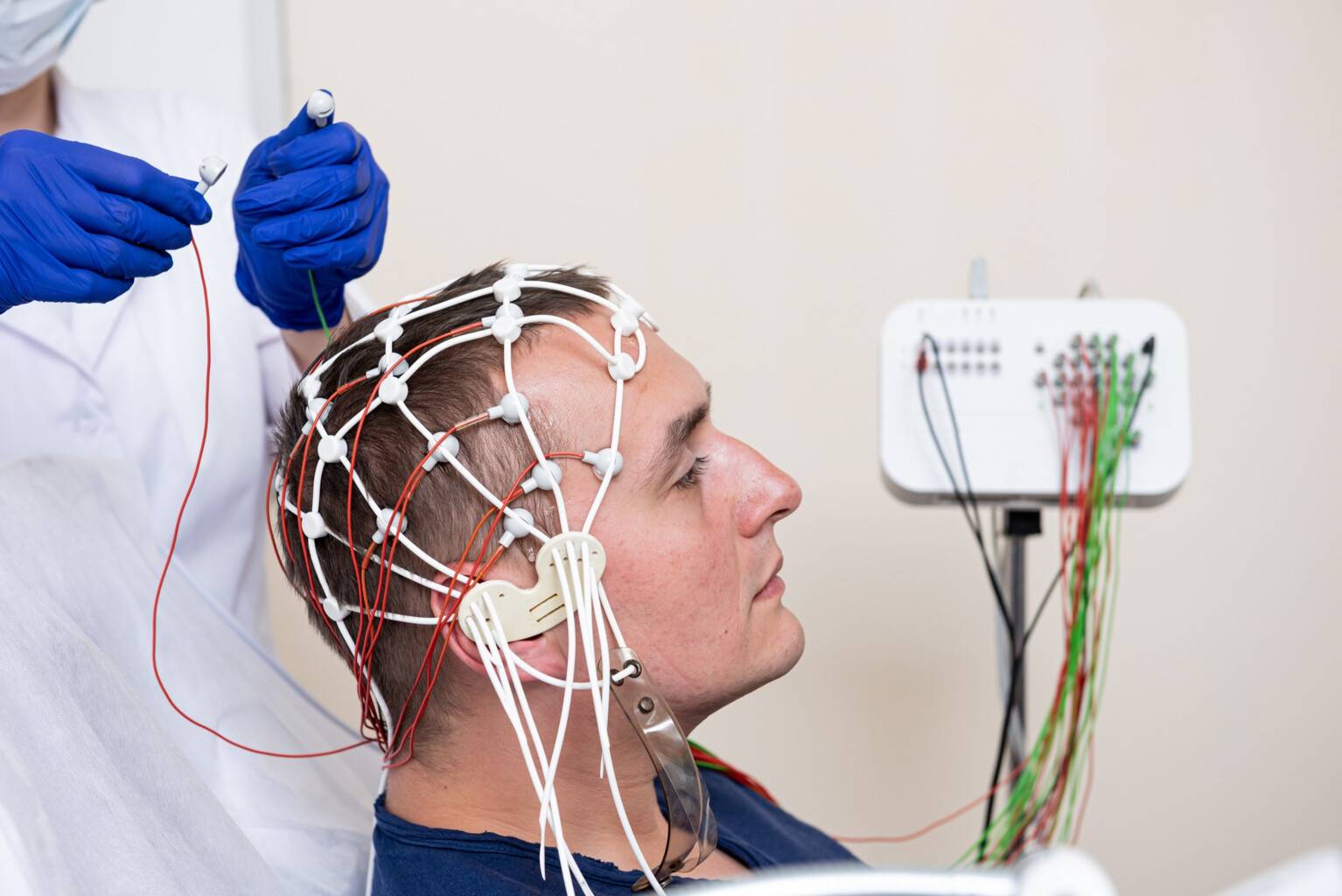
Electroencephalography (EEG) is a painless and non-invasive method that measures the electrical activity of the brain - by placing electrodes on the surface of the head.
It is used in the diagnosis of epilepsy, various attacks and disorders of consciousness, brain tumors and inflammation. As well as in strokes, memory disorders and dementia also sleep and behavioral disorders or after head injuries.
Facts
- Outpatient procedure
- Examination lasts 30 min
There are several types of electroencephalography (EEG):
- Rest EEG (Resting-state) - is performed by measuring brain activity using electrodes that are placed on the head
- Stimulated EEG - Electroencephalography is measured after the patient is activated:
- Photostimulation (light stimuli/flashes)
- Hyperventilation (deep breathing)
- Sleep EEG (during sleep)
No special preparation is required for an electroencephalography.
It is advisable to wash your hair with regular shampoo (one day before the examination) - do not use conditioner, hairspray, or hair gel.
It is advisable to take a towel to wipe off the contact gel.